PROTECTING OUR PEOPLE
FIRST RESPONDERS MUST KNOW WHAT TO DO WHEN CONFRONTED WITH CHEMICAL, BIOLOGICAL AND RADIOLICAL INCIDENTS.
THE SARIN gas incident in Tokyo in March, 1995 was a wake-up call to emergency managers around the globe. What had been considered a remote possibility was now a chilling reality. The deliberate use of highly toxic chemical materials on an nsuspecting population was a new issue that now confronted emergency planners.
In Australia that same year, a working party was established to examine the issue in more detail and to make recommendations as to what measures should be taken to improve our national preparedness for similar incidents.
When Sydney won its bid to host the 2000 Olympic Games, there was additional impetus to improve preparedness should a
chemical, biological or radiological (CBR) incident occur. Before the Games, a CBR group was established as part of the Olympic security framework to develop capabilities to respond to such an incident.
The main focus was on developing response capabilities for Sydney. In the lead-up to the Games, several measures were implemented to improve our capacity to respond.
Following the Games, a national forum was held to build on work done in this field and a national CBR Working Group, sponsored by Emergency Management Australia, held its first meeting in August, 2001. Its title was later amended to include nuclear considerations - so the reference became CBRN. It includes state and territory representatives as well as staff from Australian Government agencies likely to play a key role during any CBR incident. The group is developing national capabilities, including arrangements and plans for dealing with a CBRN incident, and providing guidance on the acquisition of specialist equipment.
One of the working group's key achievements was developing procedures in 2001 for handling suspicious packages. The anthrax
letters in the United States were the catalyst for a rash of white-powder incidents in Australia. The procedures provided a useful
basis upon which response agencies further developed their protocols. White-powder incident still occur, however state and
territory agencies are much better prepared, having further refined their filtering and assessment procedures for determining the most appropriate response. Developing national coordination arrangements for CBR incidents ranks high on the working group's agenda, with issues including training, the recording of data and the establishment of special health and medical arrangements. As concern about the potential deliberate use of a chemical, biological or radiological agent of some kind increases, having such a national working group becomes increasingly important.
TRAINING
The Sydney Olympic Games in 2000 provided the impetus to train a large number of emergency service personnel who would be first responders to a deliberate incident involving anything thought to be CSR-related. Such training could then be valuable in other cities.
The requirement was to train up to 300 first responder personnel for the Games and it was clear from the start that training must have a multi-agency focus.
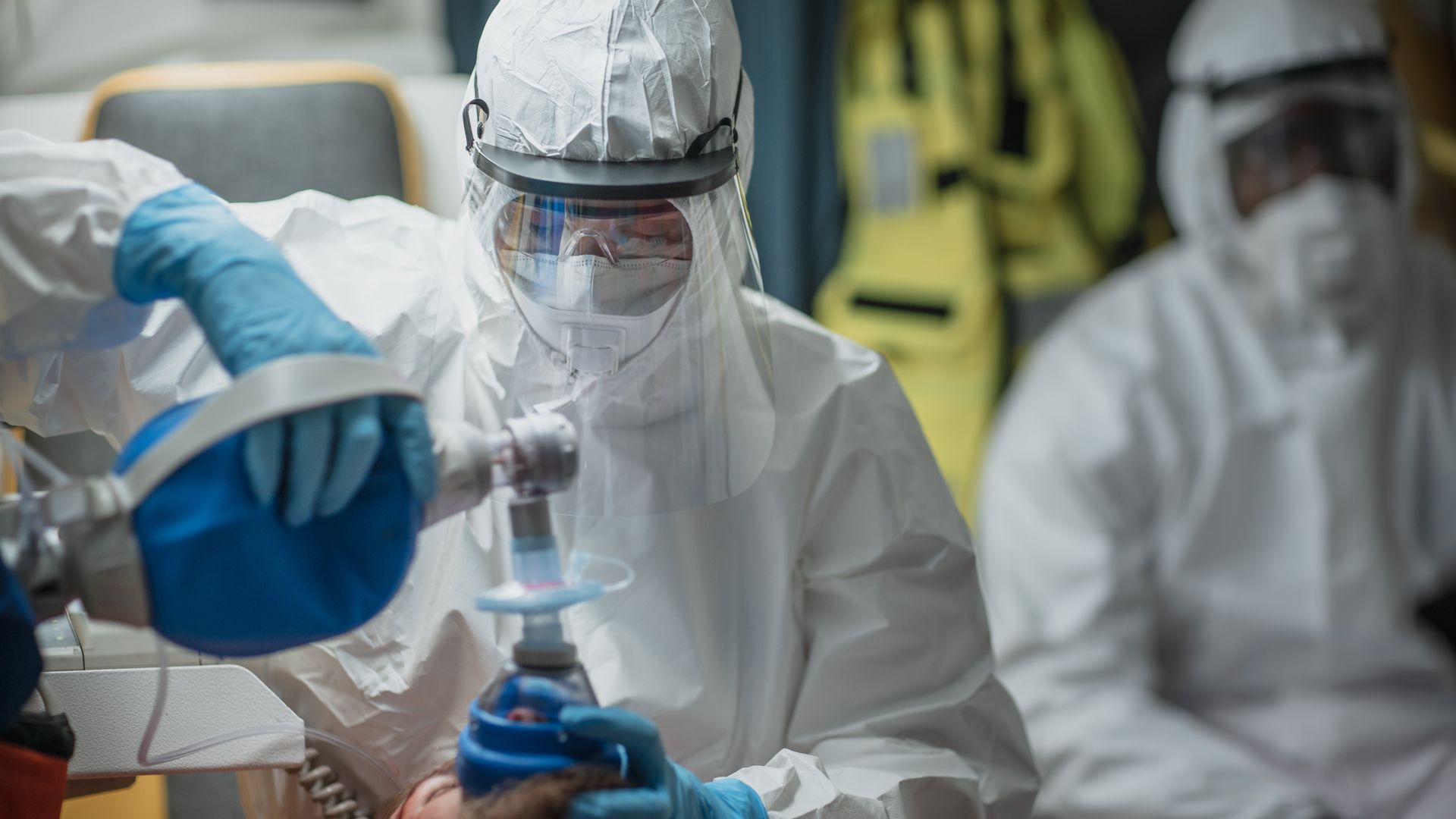
The 9/11 attack in New York placed some urgency on training and courses continue to be in high demand. They focus on management of emergencies but also include more practical hands-on practice with participants donning protective clothing and masks, and learning about decontamination. Training has also been conducted on special equipment provided through the Australian Government-sponsored CBR enhancement program. State and territory agencies continue to develop their own training packages to meet specific regional requirements.
First responders at the scene of a deliberate CBR incident will be confronted with a number of life-threatening challenges that will
need to be quickly addressed to save life and relieve suffering.
Unless properly equipped, they may soon be part of the problem.
Responders require a range of specialised equipment to enable them to carry out their tasks, including detection equipment,
protective clothing, a means of extracting casualties, a mass decontamination facility, a range of medical pharmaceuticals and
support services.
CBRN training will continue to evolve as new techniques are developed and new challenges emerge. Some may argue that a CBR
incident may never occur in this country, but if it does Australia will be prepared.
Don Patterson is an internationally recognised CBRN specialist and trainer who retired in 2006 as EMA's CBR Capability Team leader.
More design inspirations