CYCLONE RECOVERY A DEMON NAMED LARRY
IN TIMES OF DISASTER, IT ISN’T ONLY THOSE WHO LOSE EVERYTHING WHO NEED
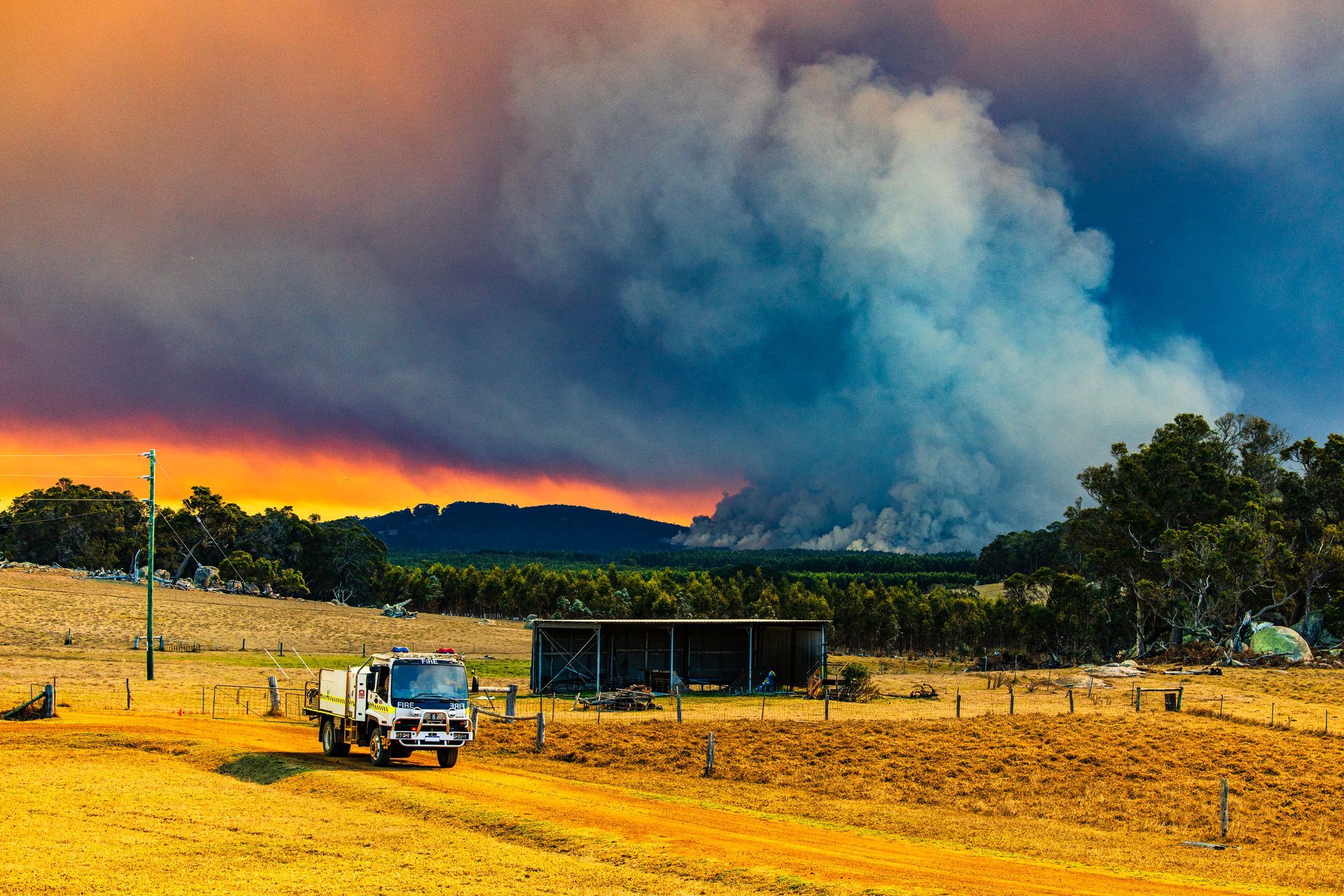
THERE IS something awe-inspiring about the beauty of far north Queensland. Beholding the emerald colour of the forest and the other greens of the plantations, we find the contrast with a brilliant blue sky filled with banks of billowing white clouds simply breathtaking. Yet for those who live in this visual paradise, their enjoyment is sobered by the constant awareness that their existence might be threatened by the howling demon of cyclonic wind. To most Australians, the images of a cyclone-struck zone are just that - images on a television screen, photographs of tragic aftermaths. To far north Queenslanders, they are
a terrifying reality and ·a future menace.
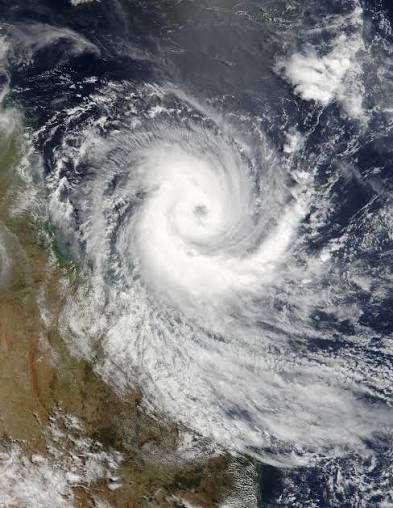
In March 2006, a powerful tropical cyclone nicknamed Larry formed, like scores of others over time, in the Coral Sea to the east of
Queensland. For days, it was tracked by the Bureau of Meteorology, which kept the public informed of its power, growth, direction and speed, accurately predicting that, unlike most other cyclones over the years, Larry would make a landfall at the height of its violence and in a significantly populated part of the far north of Queensland, near Innisfail, south of Cairns. Arriving ashore in the pre-dawn hours of March 20, its destructive winds were awesome in their power, with the eye of the cyclone passing virtually over Innisfail, the largest town in the region south of Cairns, the major city of the far north.
Raging ashore with a level of category 5, it badly damaged homes, businesses and commercial buildings, and savaged crops in extensive plantations. There were no deaths and few injuries attributed to the cyclone - something of a miracle considering its strength.
Natural disasters are at their worst when they strike down people, either primarily through death or injury such as the Asian tsunami of December 26, 2004, or through devastation of property and infrastructure, such as with Larry, which destroyed or damaged more than 14,000 homes and countless other structures, and in a few short hours laid waste to about half a billion dollars' worth of crops. At a stroke, many people lost the shelter of their homes, the wherewithal to store and cook food, clean drinking water, power and the means of communication, both individual and broadcast. From being a modern, busy and empowered series of communities, they were in some ways collectively cast back to the 19th century. It was the loss of communications that was most unsettling to affected residents - they needed to know that others with the means to help knew of
their plight and were planning to do something about it. Community organisations, either existing or ad hoe, sprang into action in the aftermath as they always seem to do so readily in Australia, but even these were often in the dark.
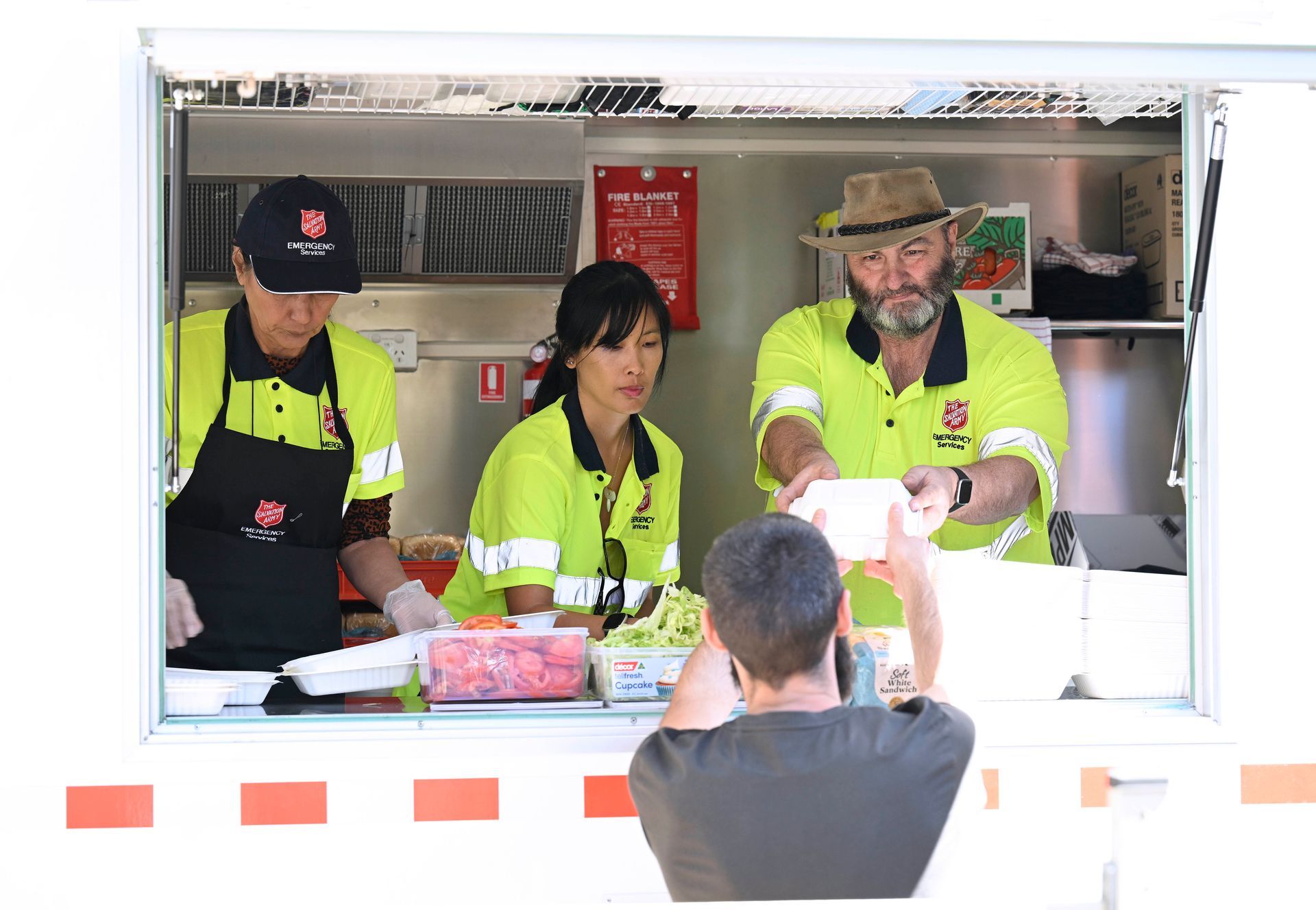
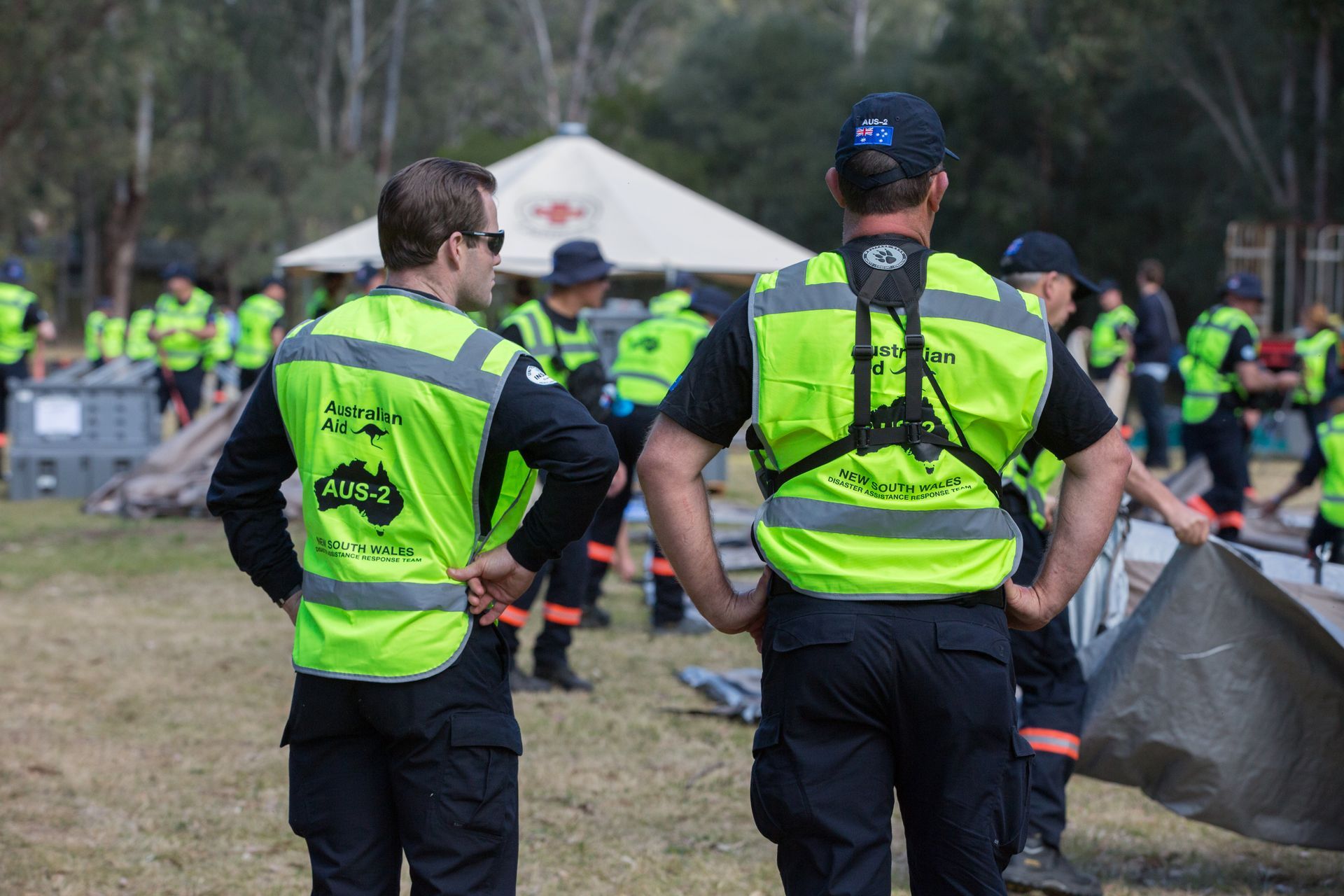
The aftermath of Cyclone Larry was typical in that it it was met by a huge and immediate effort by local residents and pre-positioned emergency workers, both local and from other parts of Queensland. They sorted out the urgent from lesser needs and worked on bringing shelter, food and clean water to those in need, clearing roads and restoring power and clean, reticulated water. When relief efforts are hindered by problems of restricted communications (even in this millennium, that seems to be the norm), previous planning for likely events is just as important as initiative and improvisation.
The swift arrival of a large Army contingent from the nearby base in Townsville - sent by Emergency Management Australia - bringing with it field communications and helicopters, gave a great boost to these early efforts.
A phenomenon of this contemporary natural disaster was the plight of "in-between" people - not those who had lost everything,
their homes and possessions, and w ho obviously needed all kinds of assistance, especially food and shelter - and, for obvious reasons, not those who had lost nothing. The "in-betweens" were those who had some damage to their homes, who still had a semblance of a roof over their heads, but had no power to store or cook food and no ability to access their own funds because of the blacking-out of banks and ATMs. The cyclone-affected area became a cash economy where you paid for goods or put them "on tick'.' To the credit of all concerned, there was little profiteering and a great deal of generosity.
Government social service agencies helped significantly with ad hoc disbursements to allow the "in-betweeners" and the needy to make that first small step towards recovery from the disaster. Nonetheless, the storm's impact on economic facilities such as electronic banking was a special challenge to those in charge of relief operations.
The storm raised questions about the usefulness of appointing an on-the-spot "supremo'.' Plainly, with big natural disasters, there will always be a strong need for expert coordination by somebody with experience in large, high-tempo logistic operations. Equally, though, there will be the crucial elements of public information and public confidence to be considered. In the aftermath of Cyclone Larry, there were excellent leaders on the ground among local political structures and in the community. There were also professional disaster relief managers from the region and from Brisbane. Integration and coordination became a major challenge as the scale of the enterprise grew, which meant that an additional layer of leadership was useful to draw together the efforts of a number of hugely energetic segments.
This person (me!) also had the job of explaining to the affected residents the efforts of and the obstacles to the relief operation, in
order to bolster public confidence. Having a supremo would not be necessary in all cases, but it seemed to work well after Larry.
I believe the preservation of life and limb, the speedy relief effort and the area's recovery from Cyclone Larry are a tribute to the forethought, energy and stoicism of the people of far north Queensland and various levels of government. Let us not forget,
however, that modern lifestyles bring modern challenges when the howling wind demon periodically lays us low.
General Peter Cosgrove (Rtd) AC MC is leading the Cyclone Larry
recovery efforts in Far North Queensland. He was Chief of the
Australian Defence Force from 2002 to 2005.
More design inspirations